
جلسة – لعبة أسئلة، تحدي، صراحة
Awsm ApsTrivia
4.18.00 Reviews
- Version
- 2.1
- Installs
- 500.00K
- Age Rating
- Everyone
Screenshots

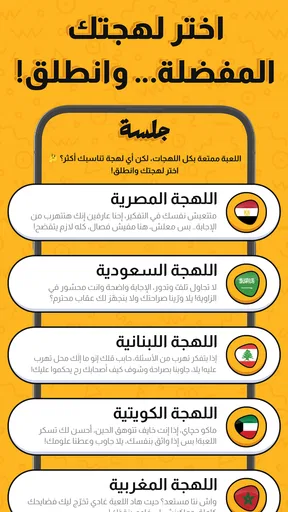
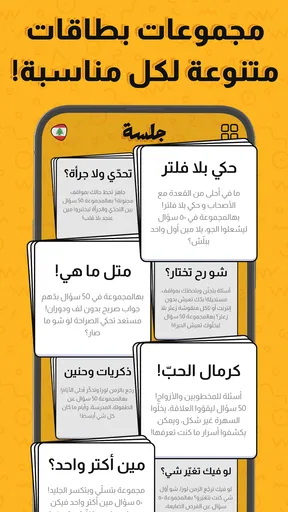
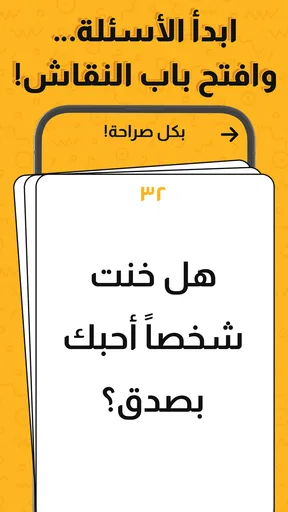
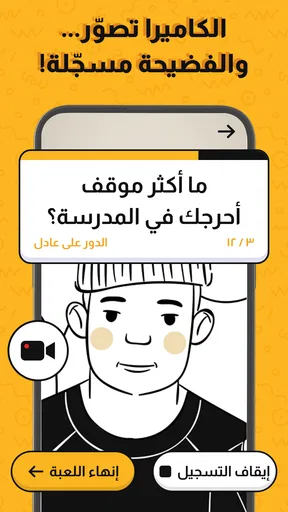
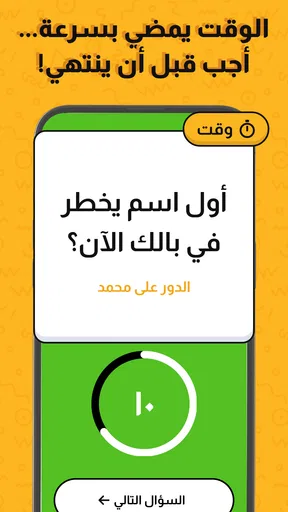
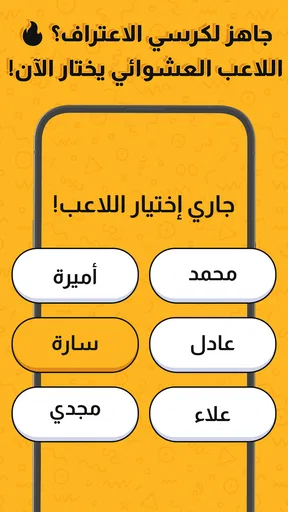
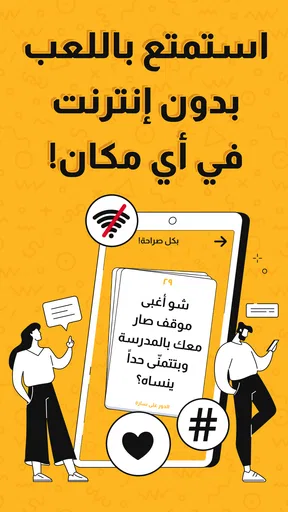
Our Review of جلسة – لعبة أسئلة، تحدي، صراحة
 Analysis by Appyee
Some games are made for a quiet few minutes alone, while others only make sense when people are sitting together. جلسة – لعبة أسئلة، تحدي، صراحة belongs firmly to the second group. I found it most enjoyable as a shared-device trivia game for a relaxed gathering, where the entertainment comes from answering questions, challenging friends, and deciding how far everyone wants to take the conversation. It is free, aimed at Everyone, and works without an internet connection, which gives it a useful place in a household or small social group.
The idea is simple, but the setting matters. This is not the kind of trivia title I would open when I want a carefully structured solo quiz with a long progression system. It is better understood as a conversation starter with a game layer. The Arabic accents and direct style give it a personality that ordinary general-knowledge alternatives often lack. In my experience, its success depends less on chasing a score and more on choosing the right people, mood, and boundaries before the first round begins.
How جلسة works when one device is shared
The most natural use case is a group gathered around one phone or tablet. Imagine a family evening after dinner, a road-trip stop, or friends waiting for food. One person holds the device, reads the prompt, and passes it along or invites answers from the group. Because the game is designed to work offline, nobody has to pause the session to look for a stable connection or hand the device to someone who has mobile data.
That offline aspect is more valuable than it first sounds. In a shared setting, internet-dependent games can introduce distractions: notifications, connection problems, or players switching to other apps while waiting. Here, the device can stay focused on the session. I would still recommend putting the phone on a quiet mode before playing, because the game itself cannot control interruptions from the wider device environment.
The strongest part of the experience is the way a question can become a discussion. A conventional trivia app usually rewards the person who knows the answer fastest. This game can do that too, but its challenge and frank-question character make the social reaction just as important. A confident answer may invite a playful dispute, while a surprising response can become the memorable moment of the evening.
That also creates the first important trade-off. If everyone wants strict rules, rapid turns, and an objective scoreboard, a traditional quiz app will probably feel cleaner. جلسة is more flexible and more conversational, but that flexibility means the group has to manage the pace itself. One person may read too quickly, another may dominate, and a lively debate can interrupt the flow. I see that as part of the format rather than a defect, but it is worth knowing before choosing it for a competitive game night.
Why the shared-device format needs a host
Although the game is easy to start, a good session benefits from one person acting as a light host. That person can explain whether answers should be given aloud, whether a challenge is accepted, and when a question should be skipped. These decisions are especially useful when the group includes people with different comfort levels or different ideas of what counts as funny.
A practical routine is to let the host read each item privately first, then decide whether it fits the group. This does not turn the game into a formal event; it simply prevents an awkward pause after a question that one player would rather not answer. It also helps when children and adults are using the same device together. The Everyone content rating does not mean every prompt will feel equally suitable for every household conversation, so judgment still belongs to the people playing.
I also found that the device should be positioned where everyone can hear the reader without leaning across the table. That small detail changes the mood. If the phone is passed constantly, the session can become disorganized. If one person keeps it and reads clearly, the game feels more like a hosted activity. For a family, that arrangement makes it easier to keep turns visible and avoid one person quietly taking control.
Setting boundaries before the first question
The word “frank” is central to the game’s identity, but frankness is not the same thing as forcing personal disclosure. Before starting, I would agree on a simple rule: anyone can decline a question without having to explain why. That keeps the tone playful and protects the shared experience, especially when relatives, younger players, or guests who do not know one another well are involved.
This is one of the most important differences between using the game with close friends and using it in a household. Friends may already understand each other’s sense of humor. Family members can have very different expectations, and a question that feels harmless to one person may feel intrusive to another. The game gives the group a framework, but it does not replace a conversation about limits.
A useful setup is to divide the session into two modes. Start with questions that everyone can answer comfortably, then allow the group to become more personal only if the atmosphere supports it. If somebody hesitates, move on immediately. That approach preserves momentum and prevents the entire room from focusing on one uncomfortable moment.
For children, I would keep an adult nearby and treat the age rating as a broad guide rather than a substitute for supervision. The game is marked Everyone, which makes it approachable for a wide audience, but families still know their own children better than any label. Younger players may interpret “challenge” differently from adults, and they may need help understanding that playful pressure should never become real pressure.
There is also a privacy boundary that comes from the shared device itself. If the phone belongs to one household member, other players may see notifications, open apps, or personal information when the device is handed around. That is not a feature of the game, but it is a real part of shared-device use. I would close unrelated apps, silence previews, and use a device that everyone is comfortable handling. These steps make the session feel more intentional and reduce accidental distractions.
Making the game fair without inventing complicated rules
Because the experience is conversational, fairness comes from the group’s agreement rather than from a formal system I would expect in a competitive trivia title. A simple rotation works well: the reader changes after a few questions, and the person answering is not always the person holding the device. This prevents the host from becoming the permanent center of attention.
For a household with mixed ages, I would also avoid treating every prompt as equally difficult. Older players may have more general knowledge, while younger players may be quicker with current everyday subjects. Instead of keeping a rigid score, the group can award informal points for clever answers, good explanations, or successful challenges. That keeps the game welcoming without pretending that every exchange is a perfectly balanced contest.
One non-obvious benefit of this approach is that the game can work as a short activity even when nobody has time for a complete session. A family can play a handful of questions while waiting for a meal, then stop without losing a long campaign or leaving a complicated match unfinished. The same quality can be a weakness for people who want a deep sense of progression, but it is a strength for casual shared use.
Coordination, account boundaries, and everyday use
Since the game is played on a device rather than through a group account, the household should decide whose phone or tablet will host the session. That sounds obvious, but it affects comfort and organization. Using one shared device avoids asking every participant to install anything, while using a personal phone may expose notifications or make the owner feel responsible for passing it around.
I would choose the device based on the group rather than on technical convenience alone. A larger screen is easier for several people to see, but a phone is easier to carry and pass around. If the session is happening in a car, the passenger should manage the game instead of the driver. If it is being used at home, placing the device on a table stand can keep both hands free for conversation and reduce the chance of dropping it.
Coordination also matters because offline play removes one kind of dependency but not every kind. The game does not need a live connection for its central use, yet the group still needs a reader, a shared understanding of turns, and a decision about when to stop. I like this balance: the app handles the prompts, while the people handle the social rules. It feels less automated than a multiplayer service, but it is also less demanding.
Someone deciding whether to install it may reasonably wonder whether an account is needed for each player. For the kind of shared-device session I reviewed, the practical model is one device used by the group, not a collection of individual profiles competing from separate phones. That makes it convenient for a spontaneous gathering, though it also means the experience is not centered on personal progress, private histories, or a persistent household leaderboard.
That distinction helps place the game beside its usual alternatives. A standard trivia app is often better when I want solo practice, a visible score, timed rounds, or a large competitive structure. A party game with separate controllers may be better when every player wants an equal interface. A conversation card deck may feel more personal and less screen-based. جلسة sits between those options: it offers the convenience of a digital deck, the accessibility of offline play, and a more direct social tone than a conventional quiz.
The trade-off is that the phone remains part of the gathering. Some households prefer activities that remove screens entirely, especially during meals. In that case, a physical card game is the better choice. I would recommend this title to people who already accept one shared screen as part of the occasion, not to someone specifically trying to create a screen-free evening.
Keeping turns comfortable for different personalities
Not everyone enjoys being put on the spot. A confident extrovert may answer immediately, while a quieter player may need a moment or prefer to respond after hearing others. The host can make a major difference by allowing a short pause and inviting, rather than demanding, participation. This is a simple workflow, but it prevents the game from rewarding only the loudest person in the room.
For a group of close friends, I would use the challenge element to create playful disagreement, not personal judgment. Ask players to explain why they chose an answer, then let the group move on. For relatives, I would keep challenges focused on the question instead of on somebody’s character. That small distinction protects trust and makes it easier for different generations to play together.
Another useful approach is to pair people informally when the group includes shy players or children. A younger participant can answer with an older relative, while two friends can debate a prompt together. This changes the game from individual exposure to shared problem-solving. It is not a built-in mode I am claiming the app provides; it is a way I would organize the room around the app’s simple format.
Age, trust, and the meaning of “Everyone”
The Everyone label makes the game easy to consider for a broad household audience, but trust still comes from the adults and players setting the tone. A rating can describe general suitability; it cannot know whether a particular question is right for a specific child, family relationship, or occasion. That is especially relevant here because the game’s frank style encourages more open conversation than a neutral fact quiz.
I would be comfortable introducing it to a mixed-age group only with an adult willing to guide the session. The adult does not need to monitor every answer or turn the activity into a lesson. The important role is simply to notice when a prompt is not a good fit, accept a skip without fuss, and make sure challenges remain voluntary.
For teenagers, the game may be most enjoyable with friends who already understand each other’s boundaries. For younger children, I would emphasize the trivia and playful challenge side while avoiding pressure to share private experiences. For older relatives, the direct style can be a good way to encourage stories and compare perspectives, provided nobody treats disagreement as a reason to embarrass someone.
This is also where the game’s Arabic character matters. If the household is comfortable with Arabic-language humor and expressions, the tone can feel more natural than a translated international quiz. If players do not understand the language or cultural references well, the social effect will be weaker even if they enjoy trivia generally. I would not choose it for a group that needs broad multilingual accessibility.
Trust affects whether the game remains fun after an unexpected answer. A good group laughs with the participant, not at them. If that distinction is uncertain, start with a short session and keep the questions light. The ability to stop without a long setup is one of the title’s practical strengths, especially when testing it with new guests.
What the current release says about its place
Awsm Aps presents this as a free trivia game rather than a paid tabletop replacement. It launched on May 12, 2025, and the current version is 2.1, with Android support from version 7.0 onward. Those details make it accessible to many existing Android devices, including older phones that may not handle newer, graphics-heavy games comfortably.
Its audience is already substantial: the game has passed half a million installs and holds an average rating of 4.1 from around two thousand ratings. I read that as a sign of clear appeal rather than proof that every group will enjoy it. The small number of written reviews compared with the broader rating activity also reminds me to judge it by its actual format: a lightweight, social question game rather than a fully documented competitive platform.
The free price is helpful for households that want to try a shared activity without committing money first. It also lowers the barrier for spontaneous use. At the same time, free access should not be confused with unlimited depth. If a group expects elaborate progression, detailed player statistics, or the polish of a large multiplayer service, it should look toward a more specialized alternative.
The version number and release timing suggest a relatively young product compared with long-established quiz brands, so I would approach it as a focused experience. That is not a criticism by itself. A smaller game can be easier to understand and less cluttered. The important question is whether the group values its Arabic, offline, frank-question identity more than a broader set of modes.
Who should use it and who should skip it
I would recommend it to friends who need an easy activity for a living room, families that enjoy talking while they play, and anyone looking for an offline Arabic trivia option with a more personal tone. It is especially suitable when the goal is to fill a short social gap rather than begin a serious tournament. The absence of an internet requirement makes it practical for places where connectivity is unreliable or deliberately avoided.
I would skip it for a solo player who wants a structured learning tool, a player who dislikes personal or direct prompts, or a group that expects every rule and score to be enforced automatically. I would also choose something else for a household seeking a completely screen-free game, or for an international group that needs language-neutral content.
The most important decision is not whether the game is technically easy to install. It is whether the people sharing the device enjoy the kind of conversation it invites. If they do, the simple format becomes an advantage. If they do not, the same simplicity can feel limited very quickly.
My household verdict
After using جلسة – لعبة أسئلة، تحدي، صراحة as a shared activity, I see it as a friendly digital question deck with a distinct Arabic personality. Its best qualities are practical: it is free, works offline, supports a broad age audience, and can turn one phone into the center of a casual gathering. The game does not need a complicated explanation, and a session can be shaped around the people in the room.
Its weaknesses come from that same openness. The group must supply the hosting, fairness, pacing, and emotional boundaries. It is not the right replacement for a serious quiz competition, a private personal game, or a physical card deck for people avoiding screens. The frank tone also means that a little preparation is worthwhile, especially when children, guests, or different generations are playing together.
My recommendation is to treat it as a conversation-led trivia game, not as a complete multiplayer system. Pick one comfortable shared device, agree that skipping is acceptable, let one person guide the first few turns, and stop while the mood is still good. Used that way, it can add energy to an ordinary evening without requiring accounts, a connection, or a long commitment. For households and friend groups that enjoy Arabic questions, playful challenges, and honest conversation, it is a worthwhile free download; for everyone else, a conventional quiz or a screen-free deck may be the better fit.
Verdict
Strengths of جلسة – لعبة أسئلة، تحدي، صراحة
- Arabic interface makes the game accessible to native speakers.
- Includes varied question styles for different group moods.
- Quick rounds work well for casual gatherings and short sessions.
- Encourages conversation and helps players learn fun facts about friends.
- Simple rules allow new players to join without a long tutorial.
Limitations of جلسة – لعبة أسئلة، تحدي، صراحة
- Some questions may feel repetitive after frequent play.
- Personal questions can be uncomfortable for more reserved players.
- Requires several participants to be enjoyable at its best.
- Content may not suit younger users without parental guidance.
- Limited appeal for users who do not understand Arabic.
Similar Picks in This Category
View All
Millionaire 2026 Quiz & Trivia
Quiz & Trivia Games by Submarine Apps4.5

Brain Test 2: Tricky Stories
Unico Studio4.7

Trivia Crack: Brain Quiz Games
etermax4.4

QuizzLand. Quiz & Trivia game
Quiz & Trivia Games by Mno Go Apps4.8

Brain Test: Tricky Puzzles
Unico Studio4.7

Logo Quiz
bubble quiz games4.5
Frequently Asked Questions
What is جلسة – لعبة أسئلة، تحدي، صراحة?
جلسة is a social party game focused on questions, challenges, and honest conversations. It is designed for groups of friends or family members who want to make gatherings more entertaining and interactive. Players can take turns answering personal or funny questions, completing challenges, and choosing how open or competitive they want the session to be.
How do you play جلسة, and how many people can participate?
The game is generally played by gathering several people in the same place and taking turns through different question or challenge categories. One player can read the prompt aloud, while everyone follows the selected rules. The exact ideal group size may depend on the available modes, but it works best with at least two participants and becomes more enjoyable with a larger group.
Is جلسة suitable for children and teenagers?
Parents should review the questions and challenge categories before allowing younger players to participate. Because the app includes honesty-based and potentially personal prompts, some content may be more appropriate for older teenagers or adults. The game is best used with people who know and respect one another, and players should always be free to skip anything uncomfortable.
Does جلسة require an internet connection to work?
The internet requirements can depend on the version of the app and the features you use. Basic question and challenge content may be available directly inside the application, while updates, advertisements, analytics, or online features could require connectivity. Before starting a group session, it is a good idea to open the app once and confirm that the desired content loads properly.
Is جلسة free to download, and does it contain advertisements or purchases?
جلسة may be available to download without an initial charge, but the overall experience can vary according to the platform and current release. Free versions of party games commonly include advertisements or optional paid elements, such as removing ads or unlocking additional content. Check the Google Play Store or App Store listing for the latest pricing and in-app purchase details before downloading.
Play our best games!


